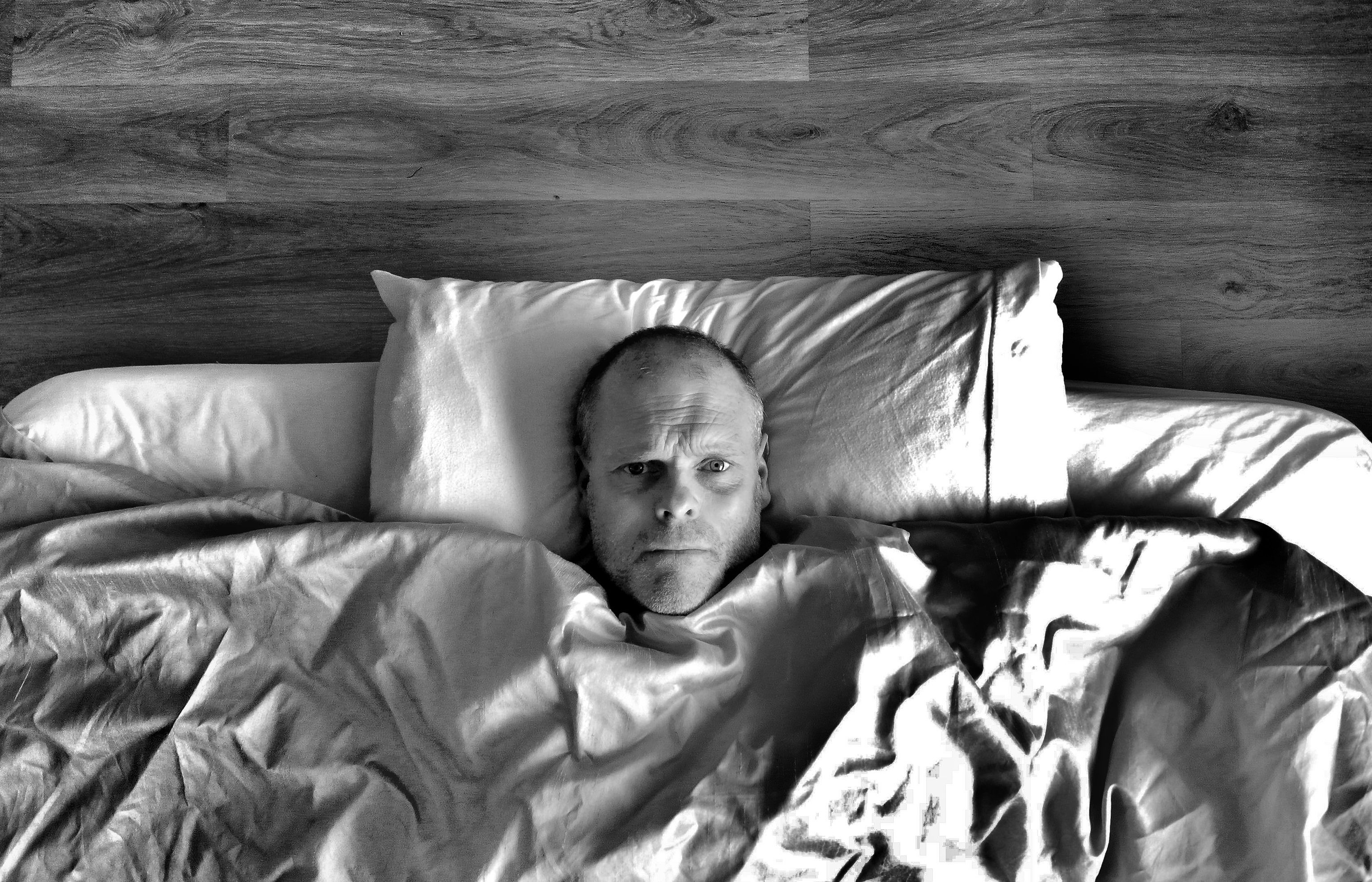
This post, above anything else, is a confession post. The confession: I haven’t read much lately. Well, I do read, but what I read are just a bunch of academic journal articles assigned by my course conveners and news. Those don’t count, right?
I have no excuse for all of this. I could have read more, especially since the pandemic everyone has been forced to stay at home. Except, I had to work on my assignments during the semester.
Now that I am on summer break, I really run out of excuses. I guess, I better catch up of my reading.
Lucky for me, a couple months ago an angel gave away a bag full of Pramudya Ananta Toer’s books on Buy Nothing of my suburb. Not wanting to miss the opportunity, I immediately put my hands up, and like an angel, or perhaps Santa is the most appropriate name for the occasion, she gave all of them to me. Within the bag includes the complete edition of Buru Quartet and other books such as: It’s Not An All Night Fair, Fugitive and Arok of Java. If any gift can make me happy, it has to be books.
I have started the marathon. So far I have finished reading the first and second books. The point of this post is to document my experience while reading this masterpiece. I will write down my feeling and reaction while reading each book.
I am fully aware that Pram is a a big name in Indonesia and almost everyone says that his books are not that easy to absorb. Implying that it requires certain level of intelligent to understand his works. Well, it’s true to some extent. But I think the problem lies in the language. Indonesian language is always changing and the new generations are not familiar with the “old” generation of Indonesian language. The old version strikes them a bit stiff and too formal. So yes, it requires a bit of effort both to understand the language and the content.
Luckily for me, the book that I got are all in English and so far I have no problem at all. Except, there are parts that I find funny. I am not a translator, but I did take translation course back in the days. And, one of the thing the translation course emphasises is that we need to contextualise everything. We cannot translate everything literally. There is one particular character in the book named Minah who has “slut-ish” personality. In Indonesian language, we refer to such character as cewek gatel, which literally translates into an itchy girl. Rather than calling her a slut, Max Lane chooses to use “itchy girl”. There must be an intention behind it which I am still figuring it out.
So yes, in the next posts I will be documenting my whole experience reading each book. I am so excited!
Traveling atau melancong adalah salah satu kegiatan yang sangat terdampak akibat pandemi. Hampir semua negara menerapkan larangan untuk melakukan perjalanan dalam kota, lebih-lebih lagi perjalanan antar kota dan negara.
Hal tersebut juga berlaku di Australia, tempat tinggal saya saat ini. Dari bulan Maret 2020, ketika kasus COVID-19 mulai melonjak, Australia menutup penerbangan dari dan ke luar negeri. Salain itu, Australia juga menutup perbatasan antara states atau negara bagian. Salah satu alasannya karena penyebaran virus COVID-19 tidak merata antar negara bagian. Misalnya, sebagai negara bagian terpadat dan tersibuk, New South Wales dan Victoria memiliki kasus penyebaran COVID-19 yang cukup signifikan dibandingkan negara bagian yang lain. Untuk menekan penyebaran, pemerintah federasi membatasi perjalanan dari dan ke kedua negara bagian tersebut.
Syukurnya, kedua negara bagian ini telah berhasil untuk flatten the curve. Sebuah mukjizat sekali. Terutama untuk negara bagian Victoria dengan angka kematian akibat COVID-19 tertinggi di Australia, sejumlah 820 jiwa. Kini kasus positif COVID-19 di negara bagian Victoria sampai nihil, atau tidak ada kasus sama sekali.
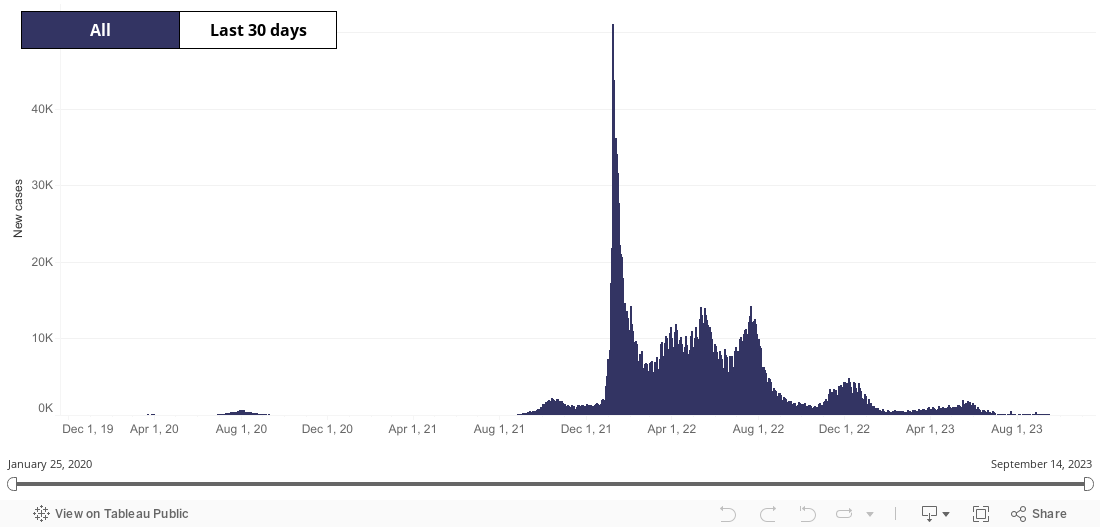
Bukan berarti kasus COVID-19 di Australia sudah tidak ada. Masih ada. Secara total, saat ini ada 51 kasus aktif. Namun, kebanyakan kasus aktif ini berasal dari warga Australia yang baru kembali dari luar negeri. Sehingga mereka langsung karantina ketika memasuki Australia. Dengan begitu penyebaran secara lokal bisa di antisipasi.
Setelah berhasil menekan penyebaran COVID-19 di hampir semua negara bagian, akhirnya pemerintah negara bagian mulai mengizinkan perjalanan antar perbatasan tanpa harus karantina dua minggu terlebih dahulu. Sepertinya saat ini semua negera bagian sudah membuka perbatasan kecuali South Australia. Alhasil, saya pun bisa dan memberanikan diri untuk traveling ke kota Melbourne.
Walaupun Melbourne sudah aman, penggunaan masker saat berada di tempat umum masih diterapkan. Berbeda sekali dengan Canberra atau Australian Capital Territory (ACT) dimana penggunaan masker tidak wajib sama sekali. Jadi sepanjang tiga hari saya di Melbourne selalu menggunakan masker kemana-mana: di hotel, tram, restoran dan saat jalan kaki keliling kota.
Lalu bagaimana rasanya traveling saat pandemi? Jujur agak paranoid ya. Apalagi karena Melbourne satu-satunya kota yang sempat memiliki kasus positif dan kematian COVID-19 tertinggi. Tapi setelah ketemu teman-teman di Melbourne akhirnya mulai merasanya nyaman dan percaya diri bahwa kasus COVID-19 di Melbourne sudah tertangani (under control).
Sekarang saya sudah balik di Canberra. Tapi saya masih aja paranoid. Takut tiba-tiba saya tertular saat perjalanan di Melbourne dan saya secara tidak sengaja membawa virus ke Canberra. Jadi ragu untuk keluar dulu di Canberra. Harusnya sih nggak ya. Kan sudah nol karus.
Nah, selama di Melbourne saya jalan-jalan kemana aja? Jujur saya nggak banyak jalan-jalan selama disana, karena saya lagi ada kerjaan saat itu. Jadi saya cuma jalan-jalan dari pagi sampai jam 13.00 siang. Setelah jam 13.00 saya harus kerja. Jadi saya cuma memanfaatkan waktu dari jam 06.00 sampai 13.00 untuk jalan-jalan.
Walaupun begitu saya masih bisa mengunjungi tempat-tempat yang identik dengan Melbourne seperti:
Hari Pertama:
1. St. Kilda
2. Brighton Beach
3. University of Melbourne (Unimelb)
Hari Kedua
1. Queen Victoria Market (QVM)
2. Royal Exhibition Building
3. Immigration Museum
4. Makan di YOI dengan teman-teman 9W1 Melbourne
5. Victoria State Library (saya akhirnya kerja disini selama 3 jam)
Hari Ketiga
1. South Melbourne Market
2. Makan di Ayam Penyet Ria
3. Shrine of Remembrance
4. The Dock
Jujur, masih banyak sekali lokasi-lokasi yang ingin dikunjungi. Tapi karena waktu terbatas akhirnya yang bisa aku kunjungi baru tempat-tempat wisata dalam kota. Lain kali kalau ke Melbourne lagi ingin ke lokasi-lokasi seperti:
1. Sovereign Hill
2. 12 Apostles
Dan tentunya banya tempat-tempat lainnya.
Selanjutnya mari ngobrol tentang budget. Berapa uang yang dibutuhkan untuk tiga hari di Melbourne? Untuk ngomongin ini aku bagi jadi tiga bagian ya: transportasi, penginapan dan makan-makan.
Transportasi
Saya berangkat ke Melbourne dengan jalur darat menggunakan Grey Hound couch. Biayanya 130 pulang pergi (PP). Untuk transportasi dalam kota menggunakan kartu myki dengan harga 4.5 dollar sekali tap. Kota Melbourne menerapkan cap atau nominal harga maksimum yang kita keluarkan untuk transportasi dalam sehari, sejumlah 9 dollar. Jadi mau jalan sebanyak apapun kita hanya akan mengeluarkan uang 9 dollar dalam sehari.
Ada satu hal unik mengenai transportasi di Melbourne. Kita tidak perlu tap kartu myki untuk daerah central business district atau CBD. Dalam kata lain, transportasi gratis untuk wilayah CBD. Jadi kalau mau jalan-jalan sekitaran CBD aja, nggak akan mengeluarkan untuk untuk transportasi.
Penginapan
Selama di Melbourne saya menginap di City Centre Budget Hotel dengan harga 125 dollar 2 malam. Kebetulan saya menginap di kamar twin bed dengan teman saya. Jadi masing-masing kami mengularkan sekitar 63 dollar untuk 2 malam. Harga yang cukup bagus mengingat lokasi hotel ada di CBD.
Makan Makan
Bagi anak Canberra, Melbourne adalah syurganya makan-makan. Selain makanan biasaya, di Melbourne banyak restoran Indonesia. Akhirnya jalan-jalan ke Melbourne jadi ajang memenuhi kekangenan untuk makan makanan Indonesia. Selama di Melbourne kami coba tiga restoran Indonesia: YOI, Nelayan dan Ayam Penyet Ria. Menurut saya yang juara, Ayam Penyet Ria. Sambalnya khas ayam penyet banget.
Makanan di Melbourne rara-rata harganya 12-15 dollar untuk menu makan berat. Untuk kopi biasanya 5.5 dollar kalau minum di cafe. Kalau mau ngopi murah beli di Seven Eleven aja, bisa dapat dengan harga 2 dollar saja.
Kalau di total transportasi, penginapan dan makan-makan, budget yang perlu dipersiapkan untuk jalan-jalan selama tiga hari di Melbourne sebanyak 300-400 dollar. Tentuk balik lagi ke gaya traveling masing-masing. Kalau kamu bisa berhemat dimakanan mungkin bisa lebih murah lagi. Karena saya kangen makanan Indonesia dan mau menikmati jalan-jalan saya selama di Melbourne, saya cukup hedon dalam jalan-jalan kemarin.
Human civilisation has definitely come a long way. We all now have small-sized portable devices that we call smartphones. But through all this progress, there is always something precious abandoned as a tradeoff. For me, that tradeoff is as simple as an act of staring at the ceiling.
Let me ask you an honest question. When was the last time you stared at the ceiling?
My hunch would be: never?
You probably ponder what's so significant about staring at the ceiling. Or, you simply react to the whole notion with "why? it's a waste of time". Yes, that is actually the point. You stare at the ceiling to waste time - to take a break from the outside world that's constantly feeding you with information (bad news, good news, funny videos, etc.)
Kids these days (kids born with smartphones on their hands) may have trouble comprehending this idea. With all attention grabbing things on the internet, why would anyone spend their times staring at the ceiling - right?
But, the ceiling stands for something deeper.
If you lived in the era before smartphones, you would know that the ceiling was a big blank screen that projects the story inside your brain.
Remember that one time you came home from school covered in sweat, feeling frustrated, because after almost three years, you still did not have a courage to talk to your crush? And yet, the ceiling was there to project your emotion. You went right to your room, dumped books filled heavy backpack of yours on the floor, and jumped right on to your bed. You first faced your head down to the pillow and your hand was gesturing that you were disappointed with yourself. Once calmed down, you turned your body upside down, and there it was - the ceiling. You stared at it without a blink. And - its quietness, motionlessness, and sameness were the things you did not know you needed. It was a pure act of no judgement.
Or, remember that night you could not sleep? The ceiling was there to entertain you. You eyes met with the white-painted ceiling and there it was the pictures of your imagination moving like it was some kind of a movie. You imagined how the day went badly or beautifully. But most importantly you are engaged with your inner-self. Yes, that's it. The ceiling connected you with yourself. The ceiling may sound like a trivial thing to have an emotional attachment with - but, the ceiling is a mere representation of your inner-self. So, in a way, losing contact with the ceiling is losing contact with yourself.
That's the reality of life today. When you have time off, you no longer spend it doing nothing (doing nothing is actually doing something. You do nothing to connect with inner-self). Instead, you would distract yourself with all the countless attention grabbing things on the world wild web. Consequently, you lose touch of you.
Yesterday I banned myself from touching my phone the entire day. I wanted a total silence. No YouTube, no Facebook, no Instagram, not even Spotify. I want to reconnect with myself - I want to reconnect with the ceiling.
The result? I feel calmer. It's almost like a meditation. My imagination now has its platform back. I am now feeding myself - as opposed to being fed by the world wild web.
P.S. The image is borrowed from an amazing flickr account. Please check his flickr account for his other amazing photography.
I have spent a lot of time contemplating about the culture we live in - the
culture of social media.
In this considerably new culture, we are encouraged to put everything on
display, including our private lives. As a result, what we display very rarely
reflects the reality. Instead, we post the improved and better version of the
reality. Worst, we post the fabricated version of our reality. We don't post
our unfiltered photos, instead we have them edited to make our lives look
better in the picture. As a result, we don't only fool others, we fool ourselves.
We are living Jean Baudrillard's prophetic reality. We live in an age of
hyperreality. Social media was supposed to be the simulated version of our
reality. What happens instead, the simulation has become the simulacra, a
shared reality whose origin is practically nonexistence. Because of it, our
lives have been reduced to pretension where meaning is a precious little
thing. Or, has meaning gone extinct?
Watch the following videos to learn more about Jean Baudrillard and read here for a brief introduction to Simulation and Simulacra.
I had my 26th birthday last May which I deliberately kept under the radar. I
changed my social media settings, so that no one would be reminded about my
birthday. Why? I detest the social media culture that encourages people to
celebrate publicly what would have been an intimate occasion. Why can't people do
that in private? You could send a private message congratulating the person -
which, I argue, would have been a much more meaningful gesture.
The same thing happens in all other occasions: wedding, graduation, having a
baby - and you name it. Instead of sending heartwarming messages privately, we
celebrate our friends' happy moments on Instagram story where other people
(our IG followers) can see it. For me, this whole thing looks disingenuous. We treat our friends' lives as our social media
contents, to show others how kind we are. We are not genuinely happy for our
friends, we do it because we need to show the world that we have lives. If I
were the person being tagged in the IG story, I would think that the celebration and congratulation have no meaning at all.
I would much appreciate it being congratulated via private messages. For me it
shows a genuine gesture, that he or she really means what he or she
says.
I would do the same to you. When others congratulate you on public forums
(Whatsapp group, Instagram story, etc), I'd prefer to text you directly. For
me, it shows that I really mean what I say. That's my way to keep meaning in a culture that fosters fakeness.
borrowed from the internet
There are a few stereotypes that we, millennial generations, are often
associated with. One, we would rather be paid less than having a job that we
don't like. In other words, money can't buy our loyalty? Consequently, we are
the generation that normalizes job hopping. However, according to a Forbes'
article (click
here), job hopping is not unique to millennials. It's just what young people do.
The question is would millennials stop job hopping when they reach
maturity?
The answer to this question should be available by now, because according to
the textbook definition, "the millennial" refers to a generation of people
who were born between 1981 and 1996. In other words, we have already had
people who are as old as 39 and as young as 24. If we can classify ages over
35 as mature ages, then we can start recording the patterns to find out
whether millennials still job hopping in their mature years. Indeed, there
has been a study (read
here) about this and the answer is we don't job hop as fast as the generation
before us (Gen X). So probably the hypothesis that all young people hob
hopping is true.
The other stereotype is that millennials are not good with money. We are
practically financially illiterate. Publications upon publications show
that home ownership among millennials is low (read
here). Some argue that this trend has something to do with the shift of
priority and principle among millennials. While the previous generation
values financial stability, millennials value experience and are more
politically active. How much of this is true? Only us as individuals can
judge for ourselves our day to day experience.
From what I have experienced, there is some elements of truth in both of the
stereotypes and the research outcomes. I've seen many of my seniors,
including myself, who are not afraid to quite their jobs when the job or the
working environment do not meet their expectations. To some extent, this is
a good thing, because it emphasizes that employee has an equal power to the
employer. Both need each other. But it also has its drawbacks. Our job
hopping habit shows that we are not that resilient. We escape the situation
that we don't like, as oppose to changing it.
What about money? We are probably the most careless generation with regards
to money. There are many factors contributing to this trend. A, we live in
an age of consumerism. When companies pay millions of dollars for
advertisements to tempt us into buying their products - we are practically
trapped. B, there is a trend among millennials who choose quality over
quantity. This decision could be driven by environmental factors as well as
health factors. But quality means higher price. So, even if millennials
choose to buy organic foods for environmental and health reason, they still
have to pay more.
The question we have to ask: do we need to celebrate millennial way of
living or should we change it? After all, it is our parents' strive to have
a stable economy that we could enjoy what we have now. Now it's our turn to
think about our future children. Do we want them to have a better
life?
It would be incorrect to assume that all millennials are the same. While
being spendthrifts are common, there are also millennials who take the other
approach to financing. Saving the environmental is one of the reasons. They
believe that minimizing carbon footprints is the only way to save the
planet. Because of it, they don't buy as much.
I take the second approach. I deliberately chose not to spend too much money
on things like clothes and things that have temporary values. I do that
because I too believe that we should be minimizing our carbon footprints.
But my main reason is that I want to have a stable life. Coming from a
family who did not have much, I learned from early on that I need to be wise
with money. Since I was a kid, I was taught that I could only buy a pair of
new clothes on a big occasion like the Eids (Islamic celebrations) or when I
really need it. I am very proud that my shopping decision still follows the
principle that my parents taught me.
Now that I am 26, I try to practice a lifestyle that does not glorify
luxury. I have seen many of friends who would not think twice to enjoy
activities that cost them a big sum of money. They would go to a concert
that costs hundreds of dollars, they would eat at a fancy restaurant that
costs half of their monthly salary, they would buy a pair of shoes that cost
them a lot. I just don't do that. In my six months in Canberra, I ate out
only for less than five times. I prefer to cook and save the money for
things that are valuable.
About saving. I don't know much about finance. What I do know is that, I
should do the opposite of what a capitalist businessman would do. If a
businessman would spend as less capital as possible and earn as much as
possible, I would do the exact opposite. I spend as less as possible and
save up as much as possible. Even though I am doing my postgraduate now, I
still try to save up. Fortunately, I still have a stable income from my
scholarship which is paid biweekly. I save what I have left after I pay my
rent, wifi bill, buy grocery, and other miscellaneous.
So how are you with money? If you are a millennial, do you think we as a
generation should change our attitude toward money?
Note:
I deliberately choose this title, because I am a big fan of CNBC show
#millennialmoney. I think it's a good show, where we can learn from young
people who are both good with money and those who are not.
I have just finished reading Christopher Wylie's "Mindfuck: Cambridge Analytica and the Plot to
Break America". If you don't know who Christopher Wylie is - he is
one of the Cambridge Analytica's whistleblowers (the other one is Britany
Kaiser). In case you are not familiar with Cambridge Analytica scandal, perhaps
you have heard about the Brexit and Donald Trump? It turns out that there is a
link between the two. Both Brexit and Donald Trump are the results of
psychological warfare used by Cambridge Analytica to influence people's
psychology so that they would vote for certain candidate or certain outcome.
This is of course is not a new tactic. What's new is the use of sophisticated
technology and illegal data harvesting from Facebook and other online flatforms
to accurately determine people's personality. As it turns out, it is easier to
convince you when you are told what you want to hear, instead of the real
facts. That's exactly what Cambridge Analytica did. They mapped people who were
vulnerable (gullible) and fed them with disinformation about issues (hidden
darkness) that they potentially care about or secretly care about such as job
or immigration.
This book is simply great. It delves deep into more than just
talking about the chronology of how the whole shitshow happened. Instead, it
also talks about culture, social issue and philosophy, if you like. Wylie's
good story telling skill certainly helps to make the story even more
interesting. When I read it I can't help but feel like the whole thing is a
sci-fi story exists in Christopher Nolan's movies. But obviously it is real and
that makes it even more scary.
One of the themes addressed in this book is about how tech company
has emerged as the new empire. Wylie repeatedly talks about how tech company
like Facebook has acted as if it is a nation. If fact, according to the book,
tech company has more power than a nation. While a country has to have a
warrant that involves a complicated bureaucracy to investigate a case, tech
company can just go and investigate the case in question. No warrant necessary.
This happened during the early days of Cambridge Analytica's investigation.
Facebook investigated Cambridge Analytica before law enforcement in the UK was
even able to get their hands on the case.
The question then is to what extent tech companies or private
entities have the power to do what they do? Should our law draw a clear line on
what is okay and what is not okay? As we have recently learned - our law does
not have that clear line yet. Because of it people's online engagements (data)
are harvested freely. We are creepily watched by the big brother of the tech
company. If they just passively watch, it would not be a big problem. They
watch and learn about our personality. With that knowledge they become the
mastermind behind every of our decisions. They feed us with advertisement,
news, hobbies that will tempt us into buying the product that we don't need and
doing things that are harmful to our democracy. In the case of election, they
feed us with issues sensitive to our psychology, so that we would vote for a
certain candidate. We no longer have our free will. We are puppets of the
modern technology.
As such, it is pressing to question whether tech company is the new
empire. Our world order cares so much about democracy and human rights. The
irony is both of these elements are being eroded by the new technology. The use
of algorithm puts people in the bubble of their "looks-alike" and
people are psychologically manipulated to think and feel in certain ways.
In the book, Wylie describes Alexander Nix as a colonial figure who
uses SCL (Cambridge Analytica) to fetishize about Britain's past colonialism.
Perhaps what Cambridge Analytica did is a new colonialism? Cambridge Analytica,
a UK-based company - meddles in foreign election (particularly in British
former colonies) and uses propaganda to divide people in those countries. Isn't
that the very tactic British Empire used in its heyday? Divide and conquer! It
is the divide and conquer tactic that has become the roots of all disasters
that are occurring in the world today. Look at India - Pakistan conflict. Look
at Palestine - Israel conflict. So perhaps tech company is the new empire?
Perhaps colonialism has evolved. It is no longer about territorial annexation,
perhaps data is the new thing to colonize? Why not? You can divide people
through that data. When people hate one another, they fight against one other,
more chaos and more destruction.
The UN charter bans any form of colonialism. Should we ban the
colonialization of data? Should we ensure that internet users are given the
rights to self-determination? Should sovereignty over the content of our
internet feeds be made a thing? I think, yes! They should.
Coincidentally, my courses this semester were about imperialism and
human rights. In fact, my final assignments were literally about those two
things. I wish I had read this book sooner, I could have talked about tech
company's emergence as the new empire, as opposed to the slowly and painfully
dying American imperialism (the one that I ended writing). Similarly, in my
other assignment I could have talked about how imperative it is for the rights
to digital privacy to be included in the Universal Declaration of Human Rights.
Instead I talked about how human rights should be treated as a dynamic concept
rather than a rigid one. Well . . . I did write about this topic before in the
Pre Departure Workshops, but I am not confident that it was any good. But I am
really interested about this topic and really look forward to being engaged in
it more in the future. Hopefully, my 2nd semester courses will allow me to
learn more about this issue!
Courtesy of sbs.com.au
Let me first clarify the title. With the world is becoming more
divisive, with the rise of alt-right ultra nationalist politics, it is
nonsensical to even bring up the idea of visa and residence permit abolition.
Certainly, this topic would have been more relevant six to eight years ago -
where everyone had thought that capitalist liberalism with its free market had
reached an equilibrium. People thought that the world had voluntarily and
happily become one - globalized, interconnected and countries are dependent on
one another. It still is the case today but the voluntary and happy sides have
been upended. Little that we know that there are people out there who resent
world's interconnectedness by making nationalistic propaganda, sovereignty
rhetoric and anti-foreignness. Because of these new phenomena, the very idea of
visa and residence permit abolition are left in the air.
No. This article is not going to talk about the abolition of visa
and residence permit in a political sense. Obviously, there is no sign that
this will ever happen in the near future. What I wanted to talk about in this
article is about the practice of attaching physical visa in your passport page
and getting a residence permit once you arrive in the country. This practice
seems to have been slowly removed from our traveling experience.
Having acquired visas and residence permits to live in two countries
(Turkey and Romania) before, I naturally thought that I had to go through the
same process to live in Australia. In turns out that, although you still have
to go through the same process, you won't find any visa on your passport page.
Likewise, once you arrive in Australia, (1) your passport will not be stamped,
(2) you are not required to go to the immigration office to process a residence
permit. Instead, you get an electronic visa (PDF file) and that's about it.
I had a hard time rationalizing this. I thought "well, this is
going to be complicated."
In my past experiences, you have to bring your residence permit with
you every time you leave the house. If you don't have one (because you are in
the country on a temporary visa), then you carry your passport with at all
times. You never know. Just in case some random police stops you in the street.
Now that I am not given a visa nor a residence permit, I thought I
would have to carry my passport with me all the time. "This is not very
pleasant. What if I drop my passport? It will get me a lot of trouble - for
sure."
But having lived here for a little over six months, I have yet to
experience being stopped on the street and asked to show any form of
identification. Although I don't carry my passport around, I do carry my
student ID and an ID that I got from the local authority. I guess we can say
that the ID I got from the local authority is the equivalent of a residence
permit? Well, it is not a compulsory to get it though. But if you want and need
one (to buy alcoholic drinks and to get in a bar) - you can get it from them.
I don't know what to feel about this. Personally, I like having my
travel experience documented in the form of visa and immigration stamps. I
mean, I have 30 blank pages or so in my passport. Might as well have them
stamped and decorated with visas. But I guess seeing the massive migration to
the digital world of almost all aspect of our lives, it is not an impossibility
to see a future where the passport book that we now know and have will be
replaced with a credit card-like passport. Our movements and data will be
easier to be traced, and no more privacy. Ye…!
I didn't know that there are people out there who like it being in a
state of melancholy. There are at least two people who confessed that they like
it being in a state of melancholy: Orhan Pamuk and Jamaica Kincaid. Well, these
are no regular people. They are established artists. They literally create
"something." And, the process to do what they do certainly not easy.
You have to set the right mood for the inspiration to flow fluidly into your
imaginative minds. And that requires you to be in a state of solitude and
melancholy.
At first, I found this statement weird or eccentric rather, "so
cliché!" I would say. But as I observe myself, I think I have to admit
that I am also one of those overly cliché people. The only difference is that I
am a no body. Not an artist, nor a creative person.
How did I know that I like a state of melancholy? For one thing, I
like being alone. Well, perhaps the right way to put it is that it doesn’t
drive me crazy to be alone. Quite the opposite, I find being alone quite
stimulating. I can talk with myself about the world, about my feeling and about
whatever things that the world throws at me.
Also, if you check my Spotify, almost 90% of them is the hotel lobby
kind of song. Slow rhythm with lyrics about unsatisfied life. Not always about
love. It could also talk about the dissatisfaction with one's own world.
I feel like being alone gives me room to organize my thoughts - and
ultimately my life. I find myself more productive when I am alone (as opposed
to being around a lot of people). I think this has to do with my personality
that likes routines, plans, and predictability. Don't confuse plans with
execution. Plans do not necessarily mean that you have to follow your "to
do list" religiously in a sequential order - instead, plans mean that you
have direction. You are not walking on an impulse.It is easy to get distracted in this life, or
simply live a life in a state of constant intoxication. Yes, that's what I
think of those people who have no clear realization of what's going on in their
lives. They don't plan ahead, they just do life as it goes. They are care-free.
On the one hand this is good, because you won't ever feel depressed. But on the
other hand, you live a lamb kind of life.
Now I can totally relate with what they say about being melancholic.
I think what prompts my initial reaction was a simple misunderstanding. I
thought when they say "the state of melancholy", they refer to a
state of being utterly and miserably sad, and that they like to be drawn in
that self-pitying situation. Of course I was wrong. They were obviously
referring to a constructive situation in which the person could express the
creative side of their brain. The former, however, leans more towards a
destructive side.
In my case, I think I, too, am more productive when I am melancholic
/ alone. If I could rewind my life on a live video, I could see the instances
where melancholy produces a positive results to my life. I hope it's still
true. I mean, who runs listening to melancholic songs and find it motivating?
Or, who reads or writes more when he is frustrated with life?
So, it's totally ok to like melancholy, if that brings you more
positivity!
As an English graduate, my exposure to non-fictions was only through
journal articles that I had to read for writing papers (If you can count
journal articles as non-fiction at all). I used to think that people are
incapable of 100% not being bias. Hmm . . . I think I am still holding on to
this thought.
I was always suspicious with books that are classified as
non-fictions. I believed that there had to be some elements of fiction in them
- whether the writer exaggerates or understates the events, views and etc.
Also, I admit that I was clouded by my judgement. When I heard
non-fiction, I tend to associate it with self-help books. I don't know why. I
don't have a logical explanation to that. And what's the problem with self-help
books? They just simply don't work on me. Or, maybe I just have not found the
right ones. I feel like I am at an age where preaching does not work anymore. I
like conversation better.
Lately, though, since I started my master in International
Relations, I have been trying to read non-fictions more (particularly the ones
that are connected to IR or Politics). And . . . I have to admit that there are
actually quite good non-fiction books, like really really good ones. And, I
don't only read politics, but I have been also trying to read biography and
even self-help book.
The moral of the story is . . . Don't say no to something that you
have not tried.
But I guess there is an explanation to my shifted perception.
Although in my undergrad we talked a lot about social issues, politics and
psychology - we did it in connection with literary works. So the focus was to
decode the literary works and to better understand the social phenomena of
certain time periods through that literary works. Now, however, we talk about
all those subjects not only to understand them but also to find ways to
potentially change them through the means of politics and policies. In other
words, because the focus of my learning environment has shifted, so does my
interests. I no longer just refer to fictional works to talk about social
issues - instead, by reading non-fiction books I will be able to refer to real
historical events.
I guess what I am trying to say is that - I have been trying to be
open-minded about books. I am trying to not compartmentalise my reading based
on my bias perception about certain genres. And . . . As I have recently
learned, fiction or non-fiction do not matter much. What's more important is
whether the writing resonates or challenges your perception in a constructive
fashion. If it does, then none of it really matters.
At this point, I have not read non-fictions that much. But I look
forward to reading them in the future.
These are non-fiction books that have changed my mind about the
genre.
Educated by Tara Westover
Becoming by Michele
Obama
The Righteous Mind
by Jonathan Haidt
Utopia for Realists
by Rutger Bregman
Grit by Angela
Duckworth
Mindfuck: Cambridge
Analytica and the Plot to Break America by Christopher Wylie(Currently Reading)
Why We're Polarized
by Ezra Klein (Will read it once I am finished with Mindfuck)
If you have any recommendation, please leave it the comment!
I grew up in a very strange time. I was born in 1994 when my
hometown (Aceh) was at the height of civil war. It's easy to imagine that in a
war time development crawls very slowly. That explains exactly my whole
experience growing up. When other cities have started enjoying the magic of
portable phone (cell phone) and the internet - we were stuck with no or few
televisions and radios. I can still remember vividly how many houses had TVs in
our village, which were only a few. Neighbors would invade the private lives of
the people who had TV in their houses by joining them at the worst time
imaginable, afternoon times. But I suppose it was a source of pride for them,
too. Owning TV was a visible sign of wealth and accomplishment for village
people. So, although in the general sense it looks like they are being
intruded, they did not mind at all.
We got our TV set quite late in our lives, too. After the war ended
in 2004, everyone could finally get back on their feet and started to make a
good living - now that nothing can stop them from earning a living anymore. And
that was a huge luxury. During the war, male members of the family were not
able to leave the house. If they did go to the farm and got caught by the
Indonesian army they would be mistaken for a GAM (the rebel). If the GAM caught
them, they would be forced to join the rebellion. Now that the war had ended,
the male members of family can resume their work again as farmers. So did my
father. After the war, my father went back to farming for a while. Soon he
changes job to become a contractor.
It is from his contractor job that we got to have what we did not
have like TV, gas stove, and washing machine. It was around this time that I
was sent to study at a boarding school. Before owning these things my mom would
cook on a fire that she had to build before cooking, and she used to wash our
clothes by hands too. It was a tough time.
Saying that I did not grow up with TV would not be correct. Although
we did not have TV, every day I would go to my neighbor and watch with them.
Basically I was the intruder in this story.
*****
Moving forward, I finished middle school and resumed my high school
in Aceh province's capital - Banda Aceh. By now (2009) many people have started
to own dummy phone. And because I would be away from my parents, I was given a
dummy phone too. The only features it had was call, sms, and a radio.
(side note: I was so obsessed with Nokia N-gage phone at this time
around - and I was not and am not even a gamer).
I am glad to say that I was once a frequent radio listener. My
favorite radio channel was102.8 OZ
Radio FM Banda Aceh. I would request song. I still remember very vividly - one
of the songs I requested very often was Rio Febrian's Aku Bertahan. (I am
literally laughing with joy writing this).
In two years time from this moment, technology grew even more
aggressive. Now, people started to own blackberry. I, too, started to save up
my pocket money to buy one. So, I bought with my own saving (I am proud of
this) when I was in 3rd grade of high school. I got the gemini one (the
cheapest one). Believe it or not, I had it until 2017. The blackberry was my
companion through high school, university, exchange, and even the first few
months of my real job. It was only when I gathered enough money from my salary
that I finally decided to buy a new phone. An Asus phone - the one I am having
right now.
Let's us not get carried away. What I wanted to talk about is
actually the radio culture.
*****
It is true that radio has never died, but it is fair to say that it
has been having near death experience ever since people started to own
smartphones. But luckily, radio culture has evolved in an effort to catch up
with the ever changing culture and technology. Now we have podcast, which is
literally the biological child of radio.
I don't know if it has anything to do my past experience, but I am
loving (hell… I am obsessed with) podcast! I listen to podcast when I am on
bus. I listen to podcast when I run, walk, cook or simply sitting in my room.
The podcast culture fits me very well. Unlike radio, where I spent
my time listening to music, - with podcast, I only listen to inspiring
interviews and news. Well, I do listen to music on my Spotify. If we consider
Spotify the modern version of radio, then I do listen to music on modern radio
(podcast) too.
*****
Here are some of my favorite podcasts:
What It Takes
I have never heard of the Academy of Achievement before. So, when I
discovered this podcast I was instantly hooked. Plus, the podcast announcer has
the sweetest voice. Who can say no to her podcast, right?
Basically "What It Takes" is a podcast where the announcer
goes through the Academy of Achievement's old archives and republishes it with
a fresh touch.
Oprah's SuperSoul Conversation
Who does not know Oprah, right? The queen! If you don't have time to
look at the video version of her SuperSoul Conversations, you can actually
listen to them. It's available on Spotify or wherever you listen your podcast.
For my favorite news related podcasts, you can check here.
*****
What are your favorite podcasts? Let me know in the comment! I would
love to expand my podcast library.
I vaguely
learned about Grit in my very brief career as a teacher (2017-2018). In the
school where I used to teach, it had a very unique culture where every teaching
staff (at least in the English department) took turn to do a microteaching in
the first 10 minutes of our department's weekly meeting. In a way, the
microteaching was an opening to the meeting (the main star). To avoid making
any mundaneness, everyone was free to pick any topic and it doesn't have to
link to our teaching material.
One
particular week, it was our department manager's turn to do the microteaching.
What she brought us in her microteaching was Duckworth's Grit. I was completely
hooked by the concept of Grit and determined that I will get a copy of the book
and read it. Unfortunately, being a teacher was very handful. I had to teach
roughly 20 hours a week. The teaching itself was fun. What I had issue with was
making elaborate lesson plans. I found this to be a waste of time. I felt like
a simple syllabus is more than sufficient to ensure that you are well guided.
My point is, why should teachers spend so much time writing long narratives on
things they plan to do in the class, when actually they could use the time to
prepare for their classes. Let's face it, lesson plan is not a preparation for
the class. Especially in this era of technology, you have to prepare
presentations and visuals that will capture students' attention. So, if I had
an authority, I would let teachers spend more times preparing on how to make
their classes interesting, instead of preparing on how to make lesson plans
about them.
Anyway, I
didn't get to read the book then. Luckily I just finished reading the book last
night. I know it took me 2 years, but the book is no less relevant to me now
than it was.
Having
finished the book, now I have much more clearer idea on what my department
manager aimed to say then. She wanted to say that: yes, teaching is not an easy
job; yes, not all students will understand what you teach; and yes, smart
students are great, but grit students are greater. I think if I had read this
book then, I would have had a better understanding on how to: a, motivate
myself and b, to motivate / teach my students. I admit that although I had an
amazing one full year teaching experience, I cannot claim that I was a great
teacher. After all, I did not have a teaching degree. I did not study
"psychology for teachers", which I think is an important knowledge
for professional teachers out there. In other words, I might have done "not
very teacher like" things during my year teaching experience, but I did it
because I did not know better. It was my first time teaching after all. It was
my first real job.
While
this book could have helped me then, it is obviously helping me now. The
concept of grit (determination and perseverance) is a key to getting through
hardship and possibly achieve greatness.
As
someone who switches career a lot in the past two years, I find this book to be
an answer to all my angst and anxiety. This book helps me understand what's
going on deep inside my twisted mind (LOL)
Although
this book may seem like a self-help book, I think it also tackles a lot of
other issues that parents and teachers could benefit from.
For An Individual
There is
one chapter in the book that makes a clear distinction between three people in
the world. One, a person with a job. Two, a person with a career. And three, a
person with a calling. The person with a job works only to survive (just like
breathing and eating). Meanwhile, the person with a career works to elevate his
career (how to get to the top). Finally, the person with a calling works to
fulfill a duty that benefits people around him (beyond himself).
I find
these three distinctions quite powerful and it gets me question which one does
my personality fit with the most.
courtesy of mariliza.com
For Parents
Being a
parent is not an easy task. Most parents don't know what they are doing. But I
think what parents can do is read what scientists have studied about parenting
and try to experiment with what they suggested.
One of
the biggest question about parenting is which parenting style is better: strict
or easygoing parents? Well, this whole issue is addressed in the book. It turns
out that a combination of both are better.
Courtesy of Angela Duckworth's Grit
For Teachers
People
always credit their parents when a person achieves greatness. But not all
parents are great, and sometimes the real hero behind a great person is his or
her teacher. So, don't underestimate the power of being a teacher. It is so
true what they say, teacher is an unsung hero.
Of course
there are many things addressed in this book. Certain topics might resonate
with you more than other topics, but that's why this book is great.
I am sure
that I will need this book again in the future to remind myself what I could do
in a specific time and event. When I become a parent for example. Or, when I
feel down and unmotivated for example. Now I know where to turn.


 Bukan berarti kasus COVID-19 di Australia sudah tidak ada. Masih ada. Secara total, saat ini ada 51 kasus aktif. Namun, kebanyakan kasus aktif ini berasal dari warga Australia yang baru kembali dari luar negeri. Sehingga mereka langsung karantina ketika memasuki Australia. Dengan begitu penyebaran secara lokal bisa di antisipasi.